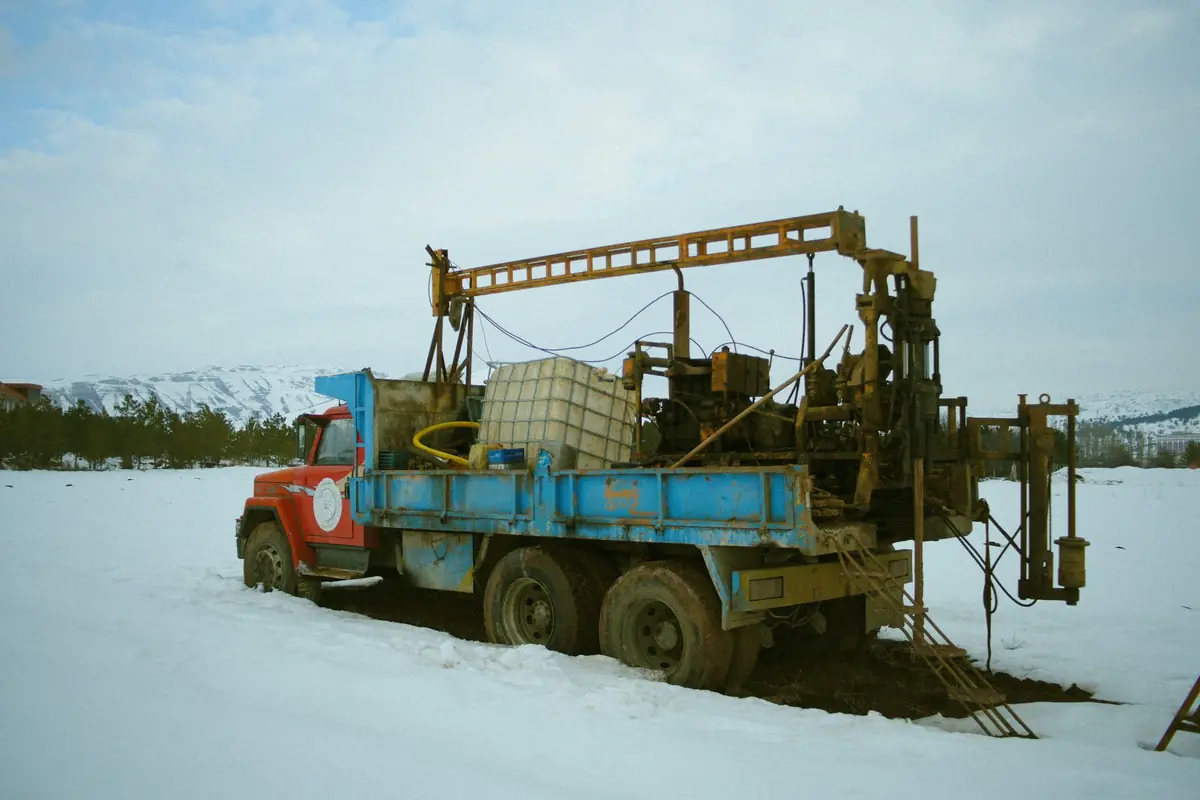
Water well drilling in Farmington, New Mexico
If your property sits outside city water lines in Farmington or anywhere in San Juan County, a private water well is often the only practical way to get a dependable supply for your home, livestock, garden, or shop. Drilling a well is a big investment, and it is not something most landowners do more than once. We make the first step simple: tell us about your property and what you need, and we'll follow up with an estimate for a new or replacement well in the Farmington area.
This page walks through how residential water well drilling usually works in northwest New Mexico, what affects the cost, what permits are involved, and the questions worth asking before anyone sets up a rig on your land.
Quick answers
How deep will my well be?
Depth depends on local geology and where water is found. In the San Juan Basin it can range from a couple hundred feet to several hundred feet. We can estimate depth using records from nearby wells.
Do I need a permit to drill a well in New Mexico?
Most new domestic wells need a permit from the New Mexico Office of the State Engineer before drilling. We can explain which permit applies to your property. Tribal land follows different rules.
How much does a new well cost?
Cost depends on depth, geology, casing, the pump system, and the distance to the house. Ask for a written estimate that breaks out each part and explains how extra footage is priced.
Is there a cost to send a request?
No. Sending a request is free. We'll follow up with an estimate for your property.
The full guide
Tap a topic to open it.
Who needs a new water well?
Most requests we see fall into a few groups:
- New home builds on rural lots outside Farmington, Flora Vista, Aztec, Bloomfield, Kirtland, and the surrounding mesas, where there is no municipal or co-op water line nearby.
- Replacement wells when an older well has dropped in yield, collapsed, or started producing sand or poor-quality water.
- Livestock and agricultural water for horses, cattle, and small farms, where hauling water is no longer practical.
- Additional wells for a guest house, barn, or second structure on the same property, where state rules allow it.
How the drilling process usually works
Every driller has their own process, but a typical residential well project in New Mexico follows the same general path:
- Site visit and estimate. The driller looks at where the well can go, access for a drill rig and support truck, distance from septic systems and property lines, and records from nearby wells. Nearby well records give a useful starting point for expected depth and water level.
- Permit. In New Mexico, groundwater is administered by the Office of the State Engineer (OSE). Most new domestic wells need an approved permit before drilling starts. Your driller can explain which permit applies to your situation and how long approval is taking.
- Drilling. The rig drills the borehole down to a water-bearing formation. Depth depends on the local geology; across the San Juan Basin it can range from a couple hundred feet to several hundred feet.
- Casing, screen, and seal. Casing keeps the hole open, a screen lets water in while keeping sand and gravel out, and a grout seal near the surface helps protect the well from surface contamination.
- Development and testing. The well is cleaned out and pumped to clear fine material, then tested for flow rate. Many owners also order a water quality test at this stage.
- Pump and system installation. A submersible pump, wiring, pressure tank, and controls are installed, and the water line is run to the house. Some drillers do this themselves; others work with a pump installer.
- Records. The driller files a well record with the state describing the depth, casing, and water level. Keep a copy with your property records.
What affects the cost of a water well?
There is no honest flat price for a well, because the biggest cost driver is something nobody can see until the rig is running: how deep the driller has to go to reach good water. When you compare estimates, look at the parts that make up the total rather than one headline number:
- Depth. Drilling is often priced per foot, so a deeper well costs more.
- Geology. Hard rock, loose sand, and changing layers each affect how fast and how safely a hole can be drilled.
- Casing type and length. Steel and PVC casing are priced differently, and some wells need casing for most of their depth.
- Pump system. The pump size depends on depth and how much water you need. Solar pumps are an option for remote or off-grid sites.
- Distance and trenching. Running the water line and electrical service from the well to the house adds cost.
- Water treatment. If testing shows hardness, iron, sulfate, or other minerals, you may want a softener or filtration system.
- Permits and records. Permit fees and filing are part of the job.
Ask every driller for a written estimate that separates drilling, casing, pump system, and other work, and ask what happens to the price if they have to drill deeper than expected.
Questions to ask a well driller
- Can I see your New Mexico well driller license number and certificate of insurance?
- Will you handle the OSE permit, or do I need to file it?
- What depth do you expect, based on nearby wells, and how do you price extra footage?
- What casing and grout do you use, and why?
- Does the estimate include the pump, pressure tank, wiring, and water line?
- What happens if the hole is dry or the yield is low?
- How soon can you get on the schedule, and how long will the job take?
- Do you offer a warranty on the pump or workmanship? Get the details in writing.
A good driller will answer these clearly. If anyone promises a fixed depth or guaranteed water before seeing your site, keep asking questions.
Water quality in the Four Corners area
Groundwater in northwest New Mexico comes mainly from sandstone aquifers, and water quality can vary from one property to the next. Some wells produce excellent water; others have high mineral content. Because a private well is not regulated like a public water system, testing is up to the owner. A basic test after drilling, and periodic testing after that, tells you whether treatment makes sense. The New Mexico Environment Department and local labs can explain testing options.
Permits and paperwork
New Mexico treats groundwater as a public resource managed by the Office of the State Engineer. Domestic well permits, well records, and rules on well spacing all come from the state, and some areas have additional requirements. Properties on tribal land, such as parts of the Navajo Nation near Shiprock, are under different rules. A local driller can tell you what applies to your parcel.
Planning tips before you drill
- Decide on the well location early in a new build, before the septic system, driveway, and outbuildings are placed.
- Make sure a drill rig and support truck can reach the site, including after rain or snow.
- Think about future water needs: a household, a few horses, and a garden need more water than a cabin.
- Budget for water testing and possible treatment.
- Keep the permit, well record, and pump details together for when you sell the property or need service.
Request a well quote
Tell us where your property is and what you are planning. There is no cost to send a request. We'll follow up to talk through the site, the timeline, and an estimate.