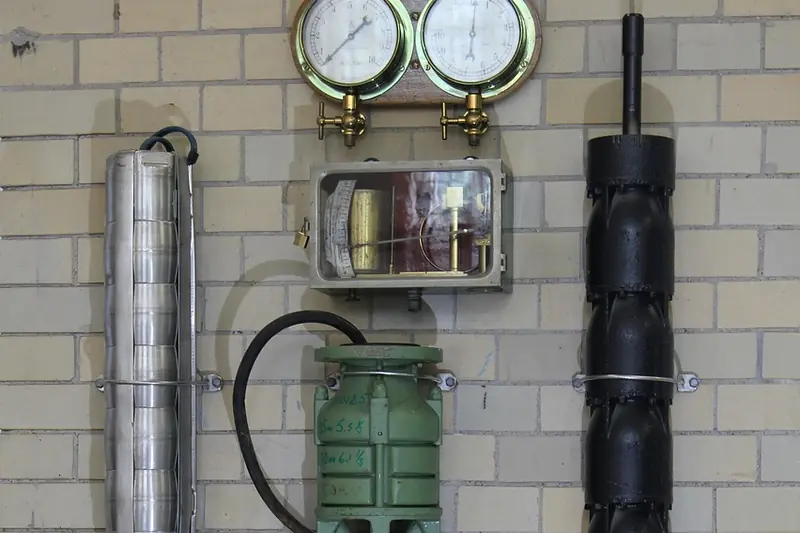
Well pump repair and installation in Farmington, NM
When a well pump stops working, the whole house stops with it: no showers, no dishes, no water for animals. Pump problems are the most common reason rural homeowners in San Juan County call for well service. Send a short request or call, and we'll follow up to diagnose the problem and get water flowing again, or to plan a new pump system on a new or existing well.
Quick answers
Why do I have no water from my well?
Common causes include a tripped breaker, a failed pressure switch, a waterlogged pressure tank, a wiring problem, or a failed pump. A technician can test the system to find the cause.
Can a well pump be repaired, or does it need to be replaced?
Switches, tanks, and control boxes can often be repaired. If the submersible pump or motor has failed, it usually needs to be replaced. Ask for written options for both.
Are solar well pumps an option?
Yes. Solar pumps are common for remote properties, cabins, and stock tanks. A technician can size a system for your well and your water needs.
The full guide
Tap a topic to open it.
Signs your well pump needs attention
- No water at all from any faucet.
- Low or surging water pressure, or pressure that drops when two fixtures run at once.
- The pump turns on and off rapidly (short cycling), which often points to a pressure tank or switch problem.
- The pump runs constantly or the electric bill jumps for no clear reason.
- Air spitting from faucets, sputtering, or noisy pipes.
- Sandy, muddy, or cloudy water that was not there before.
- A tripped breaker that keeps tripping when the pump starts.
Some of these are simple fixes; others mean the pump or motor is failing. A qualified technician can test the system and tell you which.
Quick checks before you call
If you are comfortable doing so safely, a few checks can help the technician:
- Check whether the breaker for the well pump has tripped. If it trips again right away, leave it off and call for service.
- Look at the pressure gauge near the pressure tank and note the reading.
- Note whether the problem started after a storm, a power outage, or a period of heavy water use.
- Check for obvious leaks in the line between the well and the house.
Do not open electrical boxes or pull a pump yourself. Well systems combine water and high-voltage electricity, and pulling a submersible pump takes equipment and training.
Common well pump repairs
- Pressure switch replacement. The switch tells the pump when to turn on and off. A worn or burned switch is a common, relatively quick repair.
- Pressure tank repair or replacement. A waterlogged tank or failed bladder can cause short cycling, which wears out the pump faster.
- Control box and capacitor repair. Many submersible systems have a control box with parts that fail over time.
- Wiring and splice repair. Damaged wiring between the pump and the surface can cause the pump to stop or trip breakers.
- Pump or motor replacement. When a submersible pump or motor fails, it has to be pulled from the well and replaced.
- Drop pipe and check valve repair. Leaks or failed check valves cause pressure loss and constant cycling.
Well pump installation
A new pump system is needed when a new well is drilled, when an old pump has failed for good, or when water needs have changed. A proper installation matches the pump to the well and the home:
- Well depth and water level determine how much lift the pump needs.
- Flow rate of the well limits how much water can be pumped without drawing the well down too far.
- Household demand, including irrigation and livestock, sets the size of the pump and tank.
- Power source. Most homes use grid power. Solar well pumps are popular for remote parcels, stock tanks, and cabins.
- Controls and protection, such as dry-run protection, help prevent damage if the water level drops.
Most residential wells in the area use submersible pumps, which sit down in the well. Jet pumps are sometimes used on shallow wells. Your technician can explain which type fits your well.
Repair or replace?
Whether to repair or replace depends on the age of the pump, what failed, and how much it costs to pull the pump in the first place. Because pulling a deep submersible pump is a big part of the labor, many owners choose to replace an older pump while it is already out of the well. Ask the technician to explain the options and the cost of each, in writing.
What affects the cost?
- Whether the repair is above ground (switch, tank, control box) or requires pulling the pump.
- Well depth, which affects pulling time and the length of pipe and wire.
- The pump size and type, including solar systems.
- After-hours or weekend service, if you need water restored right away.
- Travel distance for rural properties.
Protecting your pump
- Keep the pressure tank checked. A tank that has lost its air charge makes the pump work harder.
- Protect above-ground pipes and the pressure tank from freezing in winter.
- Avoid running the well dry with long irrigation cycles if your well has a low flow rate.
- Use surge protection where lightning and power fluctuations are common.
- Write down the pump details, install date, and depth, and keep them with your well records.
Questions to ask a pump technician
- What New Mexico license and insurance do you carry for pump installation?
- What do you think is wrong, and how did you test it?
- Can you give me a written estimate for repair and for replacement?
- What warranty comes with the parts and labor?
- Do you offer emergency or same-day service?
Request pump service
Whether you have no water today or are planning a new pump system, send us a short request. We'll follow up to schedule a visit in Farmington or San Juan County.